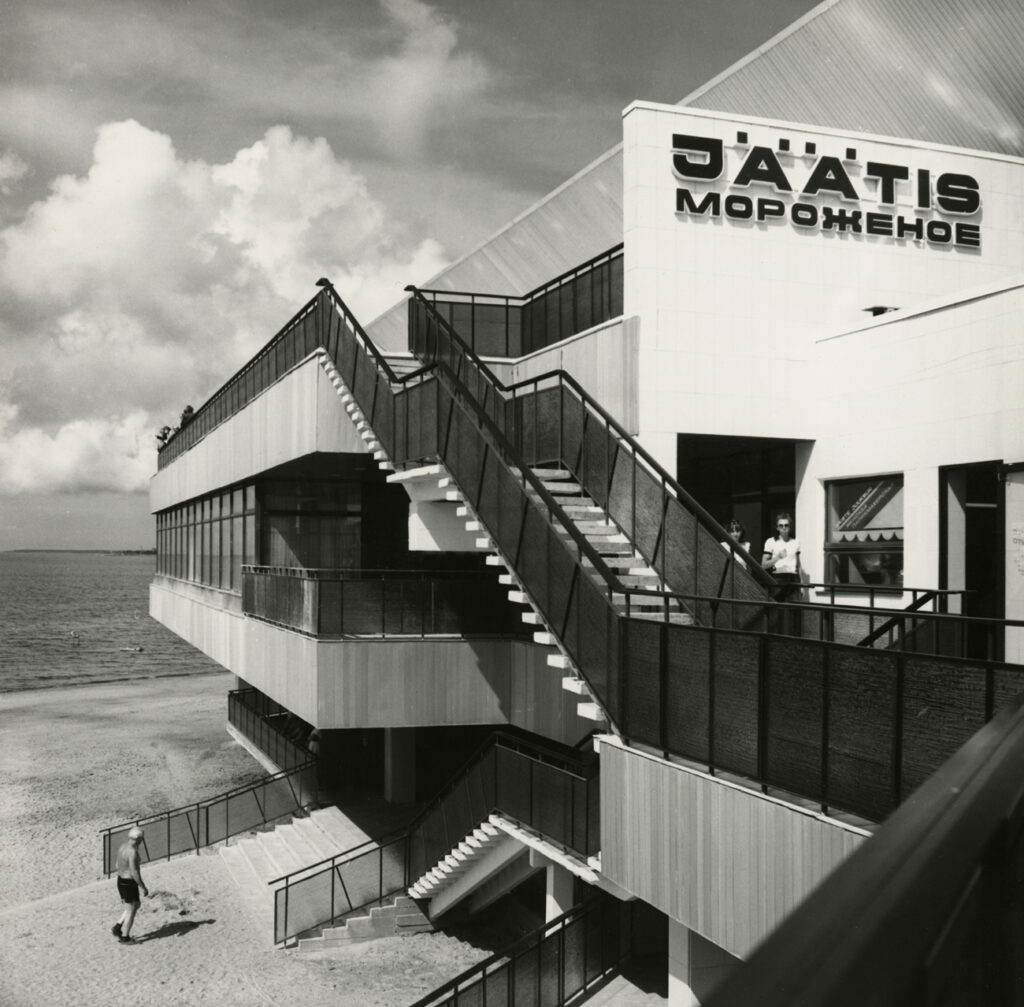
Pirita beach pavilion, photographer Rein Vainküla
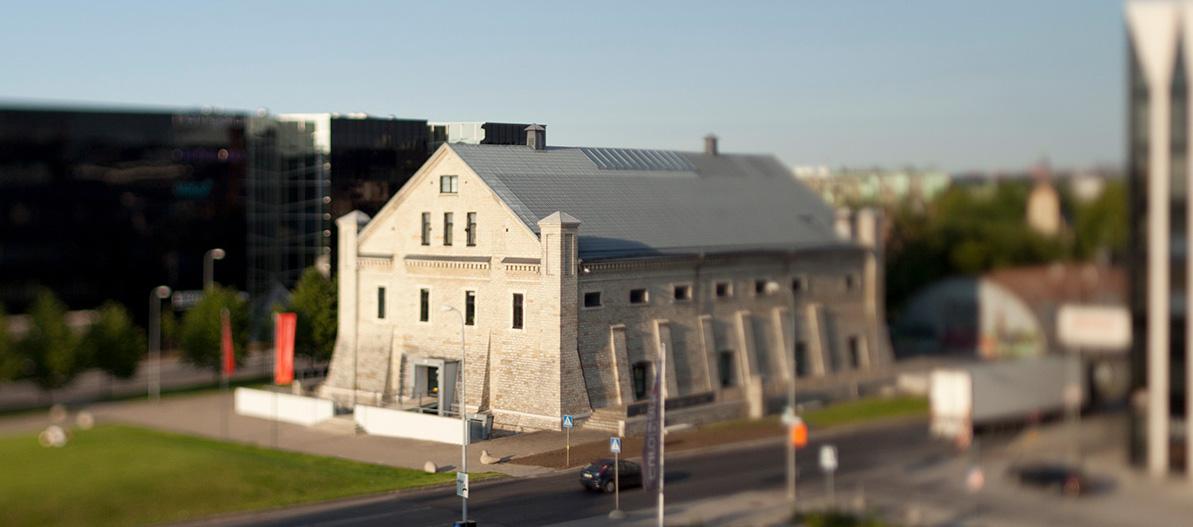
Pirita beach pavilion
Photographer Rein Vainküla of State Design Office Tsentrosojuzprojekt has captured the photogenic central element of the Pirita beach pavilion with its dining establishments, in which the combination of architectural parts provides an impressive melange. The shot, built on contrasting tones and diagonal lines, creates a somewhat deceptive, even constructivist impression. A human scale is added to the photograph by the beach-goers that seem to be almost strategically positioned.
Planning the new Pirita beach pavilion was instigated for the sailing regatta that took place in Tallinn as part of the 1980 Moscow Olympics. To make way for the new building, which was completed in 1979, a wooden beach pavilion designed by Edgar Kuusik and Franz de Vries and built in 1929, was demolished. At first, the new building, blindingly light and bright in the sun, had a restaurant, bar, cafeteria, three banquet halls, and in each wing rooms intended for beach-goers. The building was designed by Mai Roosna at Tsentrosojuzprojekt. At the beginning of the 2000s, the building was almost completely rebuilt to house apartments (architect Ülo Peil). Text: Jarmo Kauge
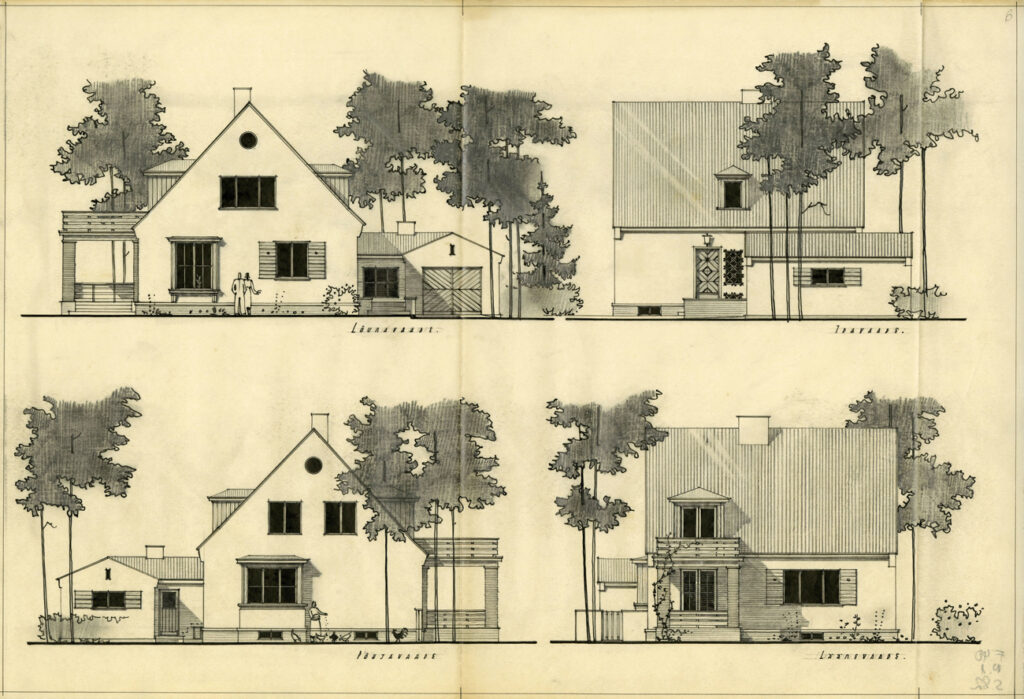
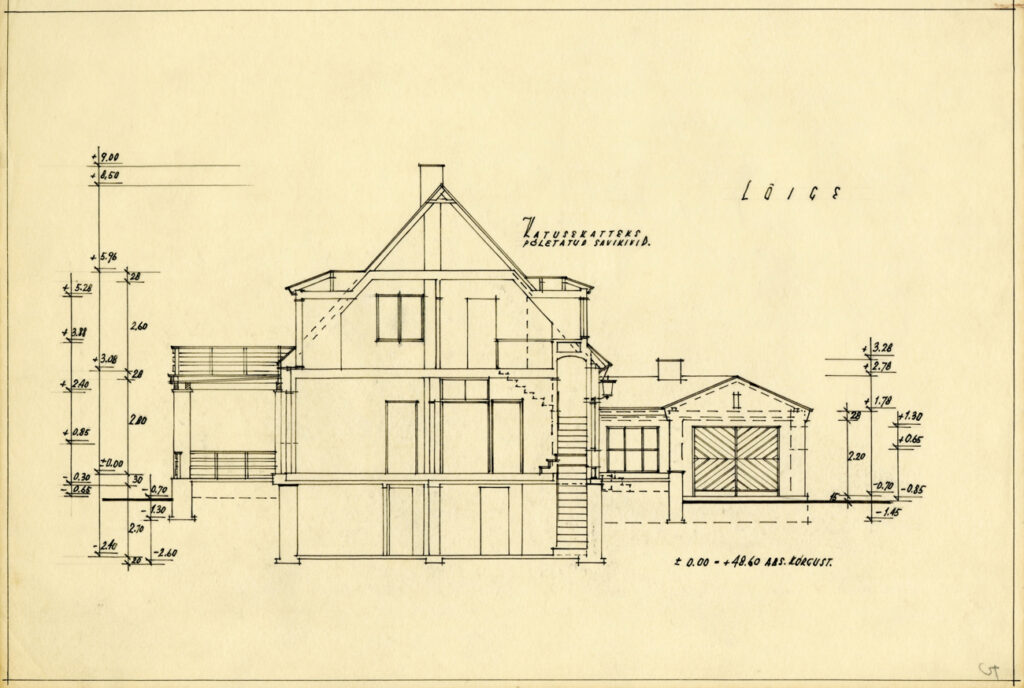
Edgar Velbri, design 1932, constructed. MEA 14.1.46
Johannes Orro’s dwelling at Raudtee Street in Tallinn
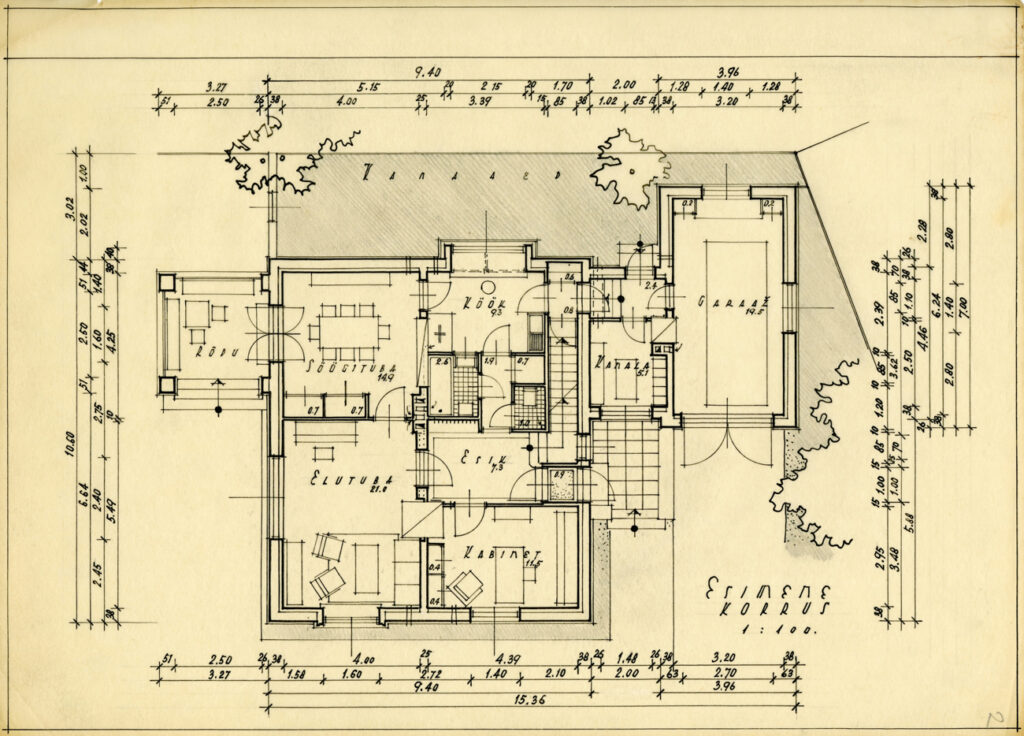
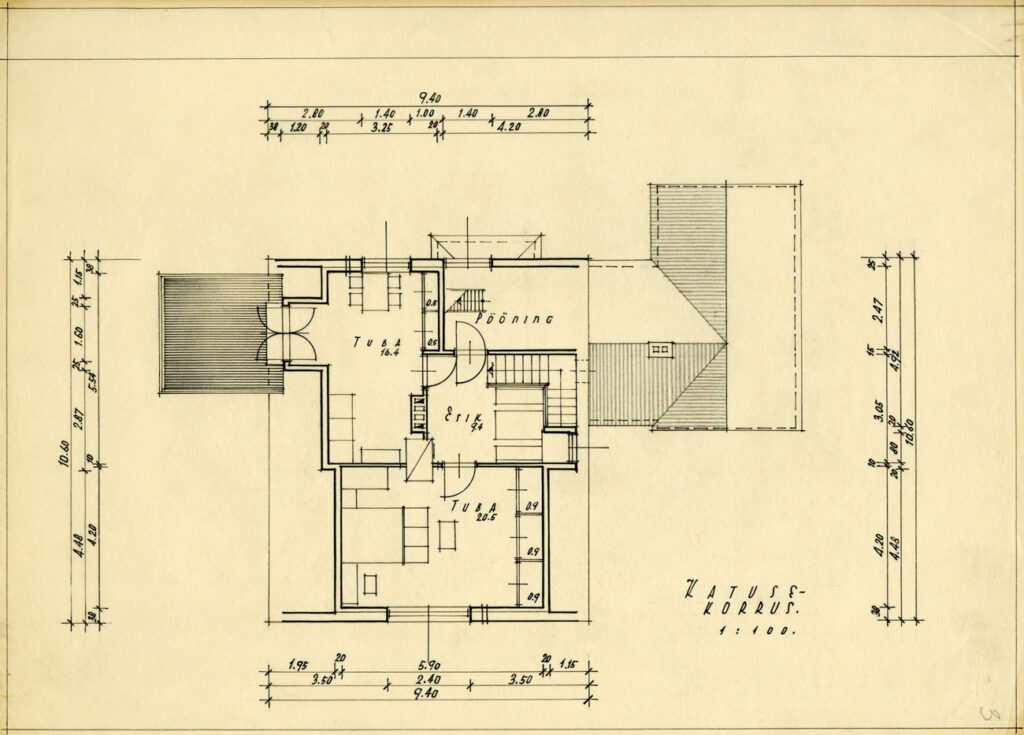
Bustling Nõmme had already grown from a holiday village to a reasonably-sized town (possessing town privileges from 1926–1940, after which it became a district of Tallinn) when café-owner Major Johannes Orro presented the design for his new building to the town government in 1932. True to the era of thriving small businesses, the ground floor of the residential building in the Kivimäe neighbourhood housed a bakery – an unquestionably successful venture, given its close proximity to the railway station. The design was drafted by young architect and Tallinn Technical University student Edgar Velbri, who was fascinated by old-fashioned architecture; probably a result of his summer internships at the Estonian National Museum, during which he surveyed Estonian farm structures. The hipped roofs, romantic shutters, and vertical siding characteristic of Estonian agricultural architecture later carried over into the architect’s personal style. Complementing such features with his talent for creating functional floorplan solutions, Velbri gained great public favour and demand, and his cosy structures gained their own nickname: “Velbri houses”. This single-page ink drawing on tracing paper is a typical 1930s residential design project, which was submitted for official approval along with an explanatory letter. Text: Sandra Mälk
Tiit Kaljundi, architectural competition 1975, perspective drawing 1984, unrealised. MEA K-53
Dr Spock’s residence
Tiit Kaljundi’s relationship with Soviet Estonia’s official architectural scene was conflicted, as one may have expected from an avant-garde artist. The ruling power saw monotonous mass apartment blocks as a simple opportunity to ease the deficit of dwelling-spaces. For Kaljundi, however, it was a situation that dampened creativity and encouraged a superficial attitude towards the residential environment, to which he responded with a starkly opposite project – the post-modernist villa. The design, which was originally entered in the magazine Japan Architect’s “House for a Superstar” competition in 1975, was dedicated to famous American doctor Benjamin Spock, whose childrearing book was widely read in Estonia at the time. This version was drafted for an exhibition highlighting the “Tallinn School” of architects, which was held in Finland in 1984. Kaljundi’s protest against the Soviet Union’s rigid, anonymous building culture is obvious. By creating an analogy between construction-stages and life-stages, he clearly expresses the opinion that man and architecture are not separable. The house and the concrete-sidewalked property around it symbolised the various stages of life. Kaljundi’s drawing presents the structure from an axonometric perspective, which enables its imagination in a three-dimensional scale on a two-dimensional surface. Text: Sandra Mälk
Mart Port, ca 1968. MEA 52.2.12
Sketches of Tallinn’s Väike-Õismäe residential neighbourhood
When designing the Väike-Õismäe residential neighbourhood, Mart Port and Malle Meelak – a shining tandem of Soviet-Estonian urban planning – seized the opportunity to shape it into an ideal city and avoid mistakes that commonly accompanied the construction of high-density housing projects. In the centre of the district designed for 40,000 residents, they placed an artificial lake with developments extending radially from it centre point. The drafts vividly convey Port’s genuine fascination with the concept of a ring-city. Compared with the earlier Mustamäe district, which was constructed as several independent micro-districts, Väike-Õismäe’s solution was unique and even so novel that there were numerous bumps along the road to gaining approval for its design. The architects had been expected to produce ordinary designs for an urban network, which would contain several smaller neighbourhoods and linear streets. This was precisely what Port and Meelak wished to avoid, instead producing a concentric street-plan with spacious outdoor areas that allowed for a more human dimension. Text: Sandra Mälk
Peeter Tarvas, 1950s. MEA 40.1.82
Dwelling of family Kangur
There is a recognisable style to the dwellings erected in Estonia’s immediate post-war years. These stone buildings with tall gabled roofs and raised gutter-lines can be found all across the country. Their construction derives from traditional German heimat architecture, intended to give residents a cosy sense of home with the help of small elements such as romantic shutters. The style also pleased the Stalinist regime: it was sufficiently unlike the dominant pre-war flat-roofed structures, which carried “unfit” Western European values. The project was donated to the museum by Maria Tarvas along with many materials from the family collection in 2006.
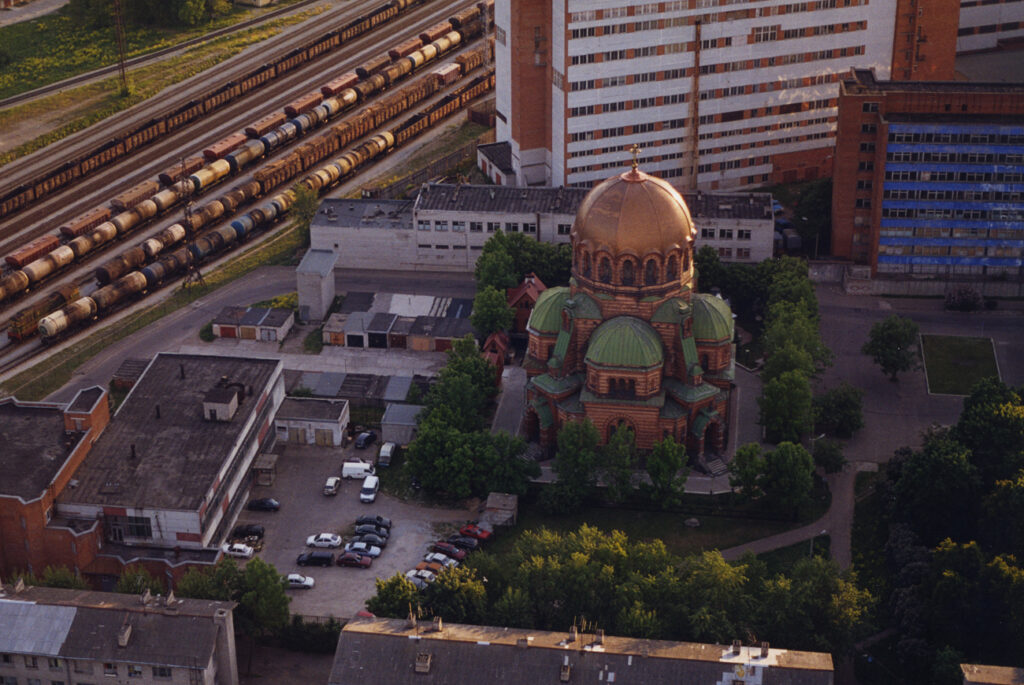
Cathedral of the Resurrection of Christ in Narva, aerial photographer Endel Grensmann
Cathedral of the Resurrection of Christ in Narva
Harsh reality: The Cathedral of the Resurrection of Christ in Narva designed by Paul Alisch in 1896 is the only neo-Byzantine religious building in Estonia – here seen in its Soviet context of dishonour. Before the war, the grand building stood in the now non-existent district of Joaoru in line with Alexander’s Cathedral creating an impressive architectural ensemble. Kiriku tänav (Church Street), which once connected the two churches, was however, filled with apartment blocks after the war. The 2002 photograph by aerial photographer Endel Grensmann was purchased by the museum for its collection in 2003. Text: Jarmo Kauge
-
-
Karl Tarvas was interested in photography. Photomontage of the two Karls in front of their home on Endla Street in Tallinn, ca. 1906
-
-
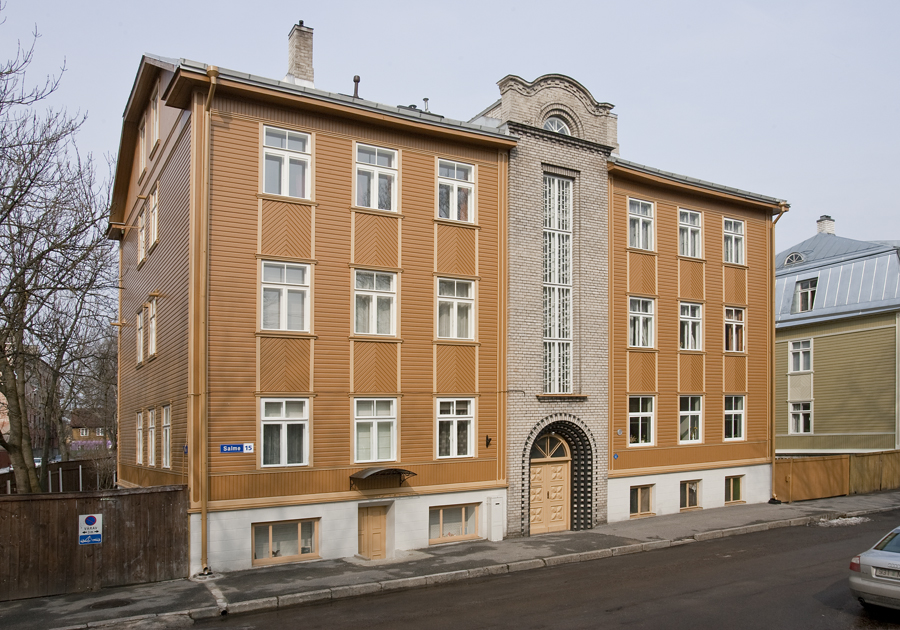
“Tallinn-type” house at Salme St., Karl Tarvas. Photo: Peeter Sirge
-
-
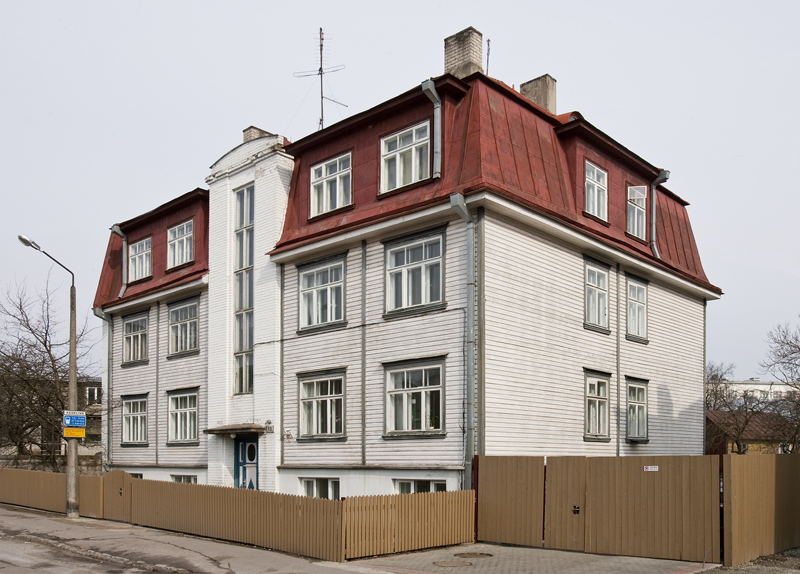
“Tallinn-type” house with a central stone stairway at 13 Magasini St., Karl Tarvas. Photo: Peeter Sirge
-
-
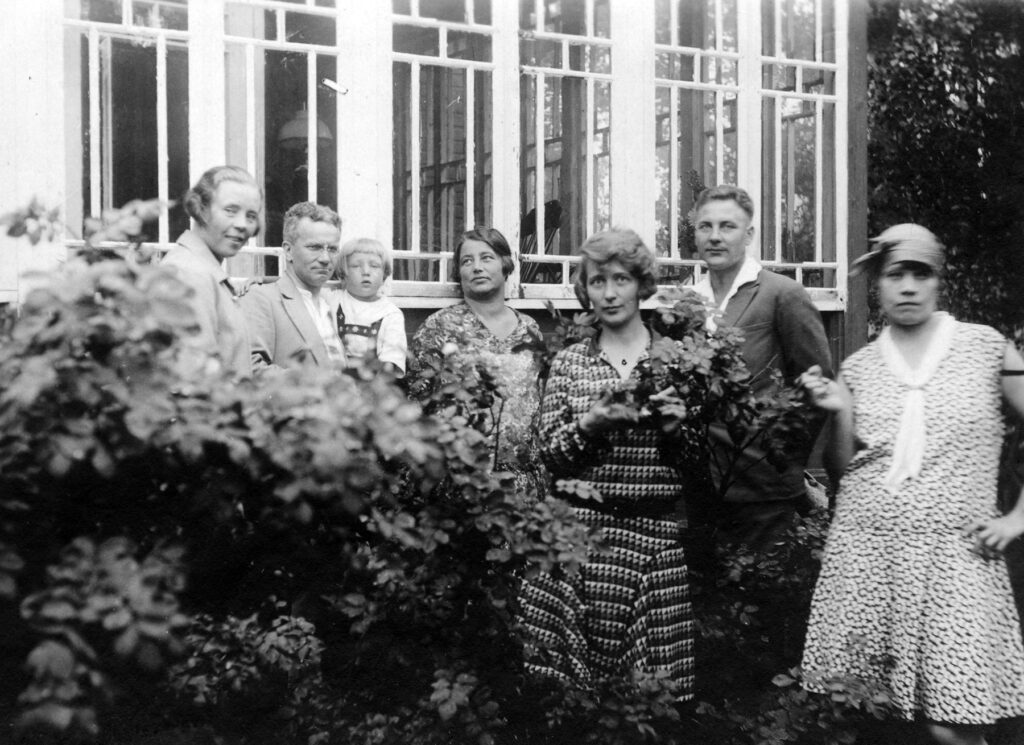
Karl Tarvas in Loksa, in the cottage of land surveyor Evald Hacker with the Sepp family. Karl Tarvas, second from left, with his son Pärtel, ca. 1927.
-
-
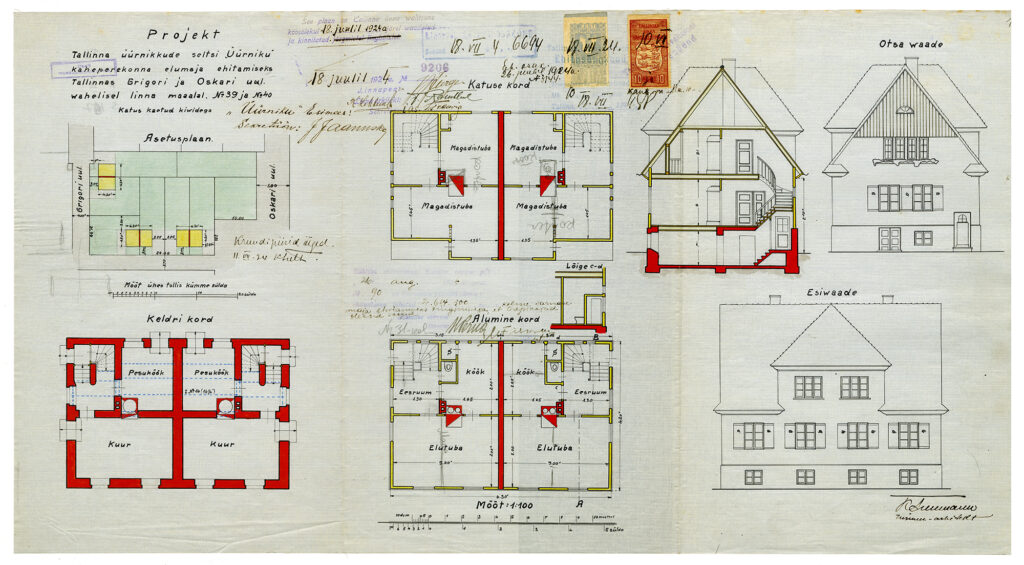
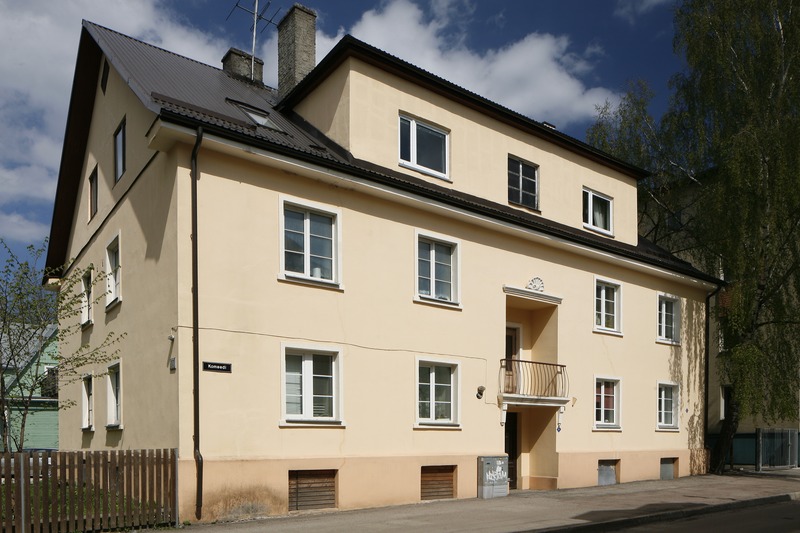
Apartment building commissioned by a tenants’ association
-
-
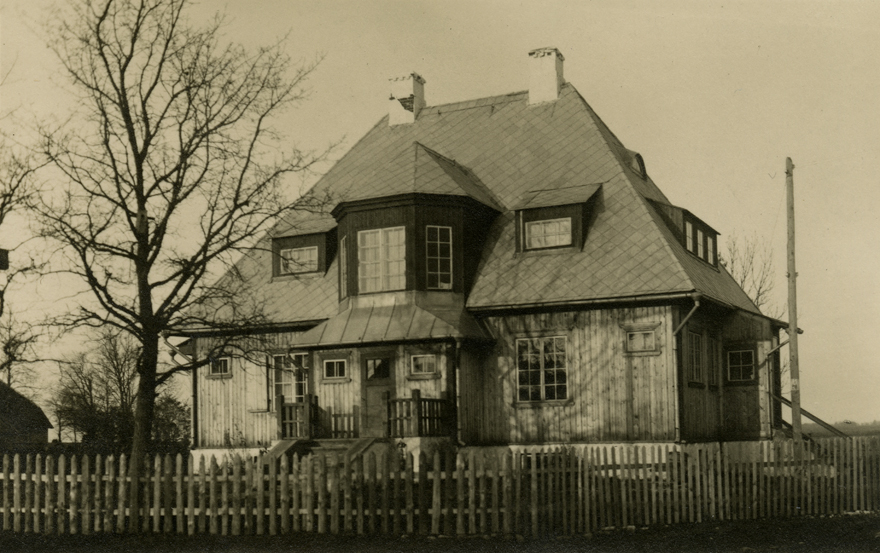
House of the veterinarian in Raasiku
-
-
The 8-apartment building was built according to the design of Karl Tarvas, who won the Soviet Estonia Prize in the competition for standard houses in 1947, Karl Tarvas
EAM fond 40
EAA 100 / Karl Tarvas
The creative legacy of Karl Tarvas (Treumann, 1885–1975) significantly shaped the residential architecture of Tallinn’s suburbs in 1920–1940. During the interwar period, he devoted himself to the less prosperous course and to improving the living conditions of the tenants by designing wooden apartment buildings to can be built quickly, the most known which is characteristic of Tallinn houses. These buildings with a timber framework with stone staircases were built by smaller entrepeneurs with a help of favorable state construction loan. The owner usually lived on the spacious apartment on the first floor of the building and rented out remaining 2-3-room apartments. In the second half of the 1930s, Karl Tarvas designed stone apartment buildings according to the state’s plan to make Tallinn’s city center more representative. In the 1920s, before founding his office, Karl Tarvas worked as an architect in Harju County and took care of the construction of rural school buildings, departments and other public buildings. His three sons also chose the profession of architect, the most known of the three is Peeter Tarvas (1916–1987). More about Karl Tarvas’ studies at the Riga Polytechnic Institute in 1906–1915 and his latest work can be read from the articly by Sandra Mälk in the collection of the Riga Technical University (RTU Scientific Journal, 2021/5): https://hesihe-journals.rtu.lv/article/view/HESIHE.2021.004/2824
Karl Tarvas was one of the 15 architects who founded the Estonian Association of Architects in 1921, which is the predecessor of the Estonian Association of Architects.
(klick on the picture to see more illustrations)